Four Boards, Four Years, Two Centimetres: How Fliteboard Turned an eFoil Into a Wave Weapon

The obsessive, incremental, occasionally absurd evolution of the Ultra — from powered party trick to legitimate wave weapon.

Article by West Coast eFoil

There's a particular kind of madness that takes hold of engineers when surfers get involved. You see it in shapers who spend forty years chasing three millimetres of tail rocker. You see it in fin designers who'll talk about cant angle at dinner parties until the room clears. And you see it, unmistakably, in the team at Fliteboard — who have spent four consecutive model years shaving grams, shifting mass, and nudging a mast position forward by two centimetres in the pursuit of making a motorised hydrofoil feel like it doesn't have a motor at all.

The Ultra series is Fliteboard's flagship performance line. It is not, and has never been, a board for people who just want to cruise around the bay on a Sunday morning. It is a board for people who want to cruise around the bay on a Sunday morning, find a bump of swell, kill the throttle, drop into it, and pretend — convincingly — that they're prone foiling.

That last part is what changed. And how it changed, model by model, tells you a lot about where eFoiling is headed.
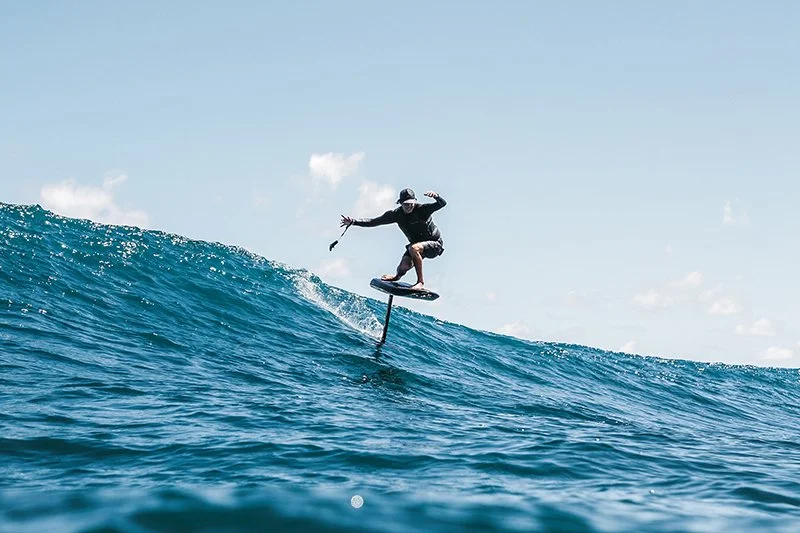
The Original Ultra: A Carbon-Wrapped Promise

The first Ultra arrived as Fliteboard's statement of intent for the performance end of the market. Carbon fibre and Innegra construction. Light. Responsive. The kind of board that made intermediate riders feel fast and advanced riders feel like they were finally on something worthy of their ability.

But let's be honest about what it was: it was a very good powered eFoil. The mast position was optimised for what eFoils do most of the time — fly under motor power. Footstraps were available. Handles were there for carrying it down to the water. It was a performance board in the way a sports car is a performance car: exciting, capable, and firmly tethered to its engine.

What Fliteboard had done, though, was create the architecture. The modular system — swappable batteries, interchangeable wings, prop-or-jet options — meant the Ultra wasn't a finished product. It was a platform. A starting point. The company just hadn't said the quiet part out loud yet: they wanted to build a surf foil with a battery in it.
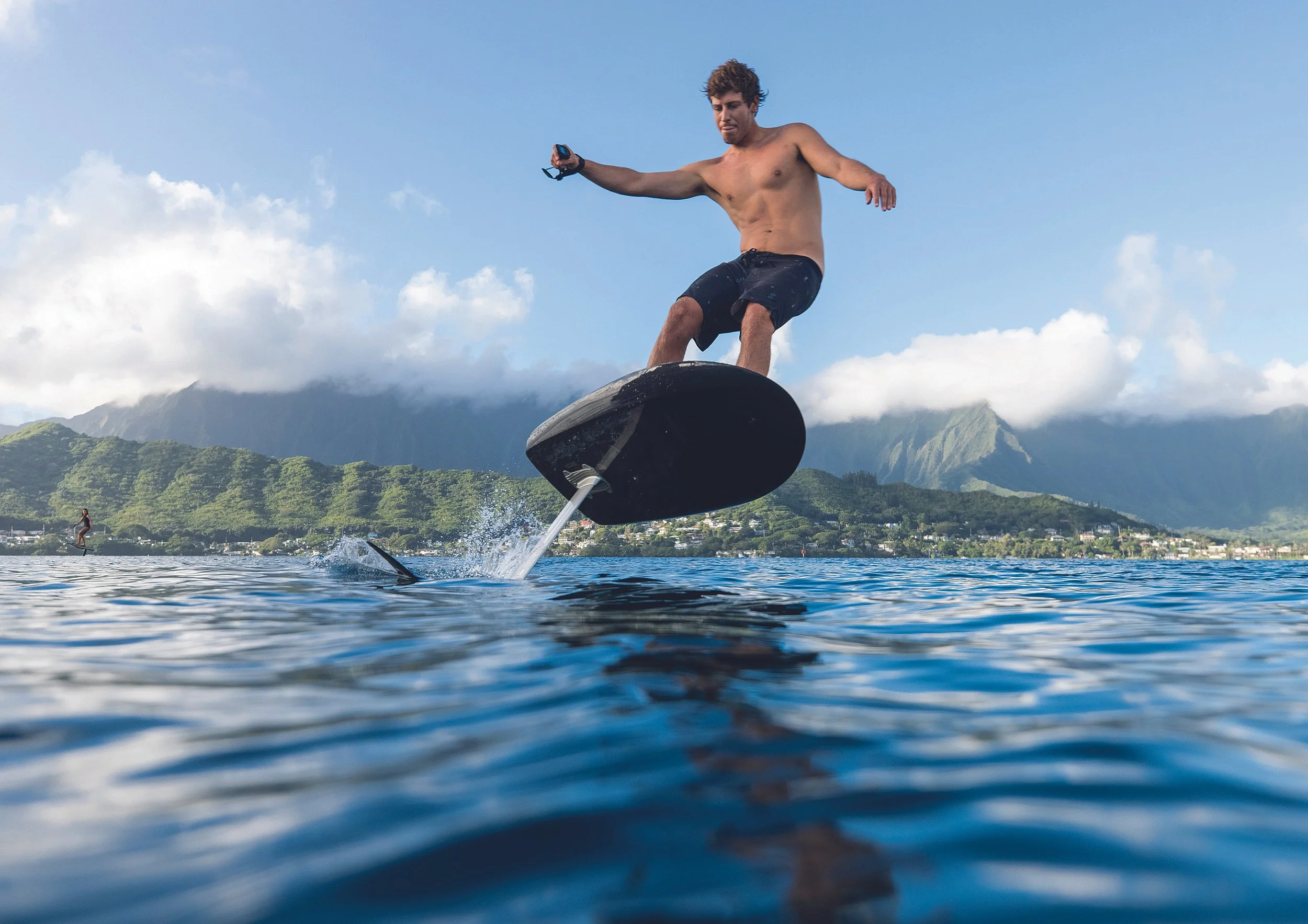
Ultra L (2023): Stripping Down

The "L" stands for Light, though Fliteboard CEO David Trewern joked it meant "Life Changing" when the board launched alongside the Series 3.

The Ultra L shared the same dimensions and volume as the original Ultra, but the approach was surgical: lose weight, everywhere, by any means that don't compromise the ride. The footstraps went. The carry handles went. The battery box was rebuilt in hand-laid carbon fibre. The result was a complete setup weighing 22.5 kilograms with the new Flitecell Nano battery — making it the lightest performance eFoil you could buy in 2023.

But the real insight wasn't about total weight. It was about swing weight. Trewern explained the philosophy at the time: they hadn't just reduced the weight, they'd repositioned the battery mass as close to the mast as possible, tightening the rotational inertia of the whole system. On paper, it's an engineering concept. On the water, it's the difference between a board that pivots when you lean and a board that lags.

The Ultra L didn't change the mast position. It didn't need to. What it did was prove that weight distribution — where the mass sits relative to the foil — matters as much as, if not more than, the mast's physical location on the board. It was the first Ultra that made experienced riders think: this thing could actually work in waves.

And it did. Tested at The Pass in Byron Bay on clean, overhead right-handers, the Ultra L with the Nano battery and the prototype folding prop was, by all accounts, a revelation. The “foldy” — which collapses flat when you release the throttle — meant riders could shut down the motor and glide into a wave with minimal drag.

The gold colourway, incidentally, was divisive. Rumours in the Flite community suggested the new anodising was designed to appeal to the burgeoning Dubai market, where clients were requesting “gold efoils”. Apparently one client in the UAE had a garage full of gold-hued water toys. He wanted to add a Fliteboard to the collection.

We digress … Regardless of the bling factor, performance has a way of settling aesthetic arguments. And this was the market’s best and lightest lithium joy stick.
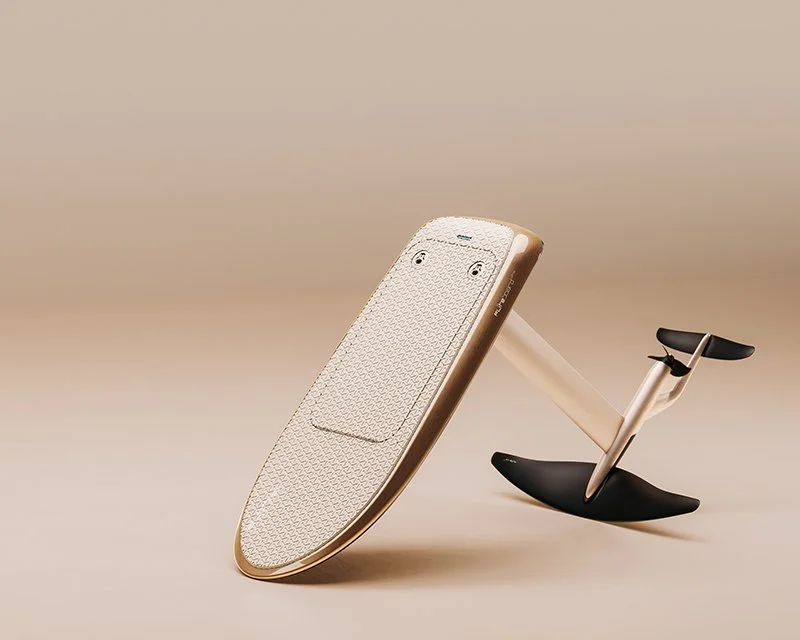
Ultra L2 (2024): The Shape Shifts

If the Ultra L was the original Ultra on Ozempic, the Ultra L2 was an entirely new creature.

The dimensions changed: narrower outline, slightly longer, pulled down to 49 litres. At 4'4" by 21 inches, it was closer in form to a prone foil board than anything Fliteboard had built before. The carbon Innegra construction was retained, and the total system weight with the Nano battery held at a staggering 18 kilograms. For context, that's similar to the weight of some of the earliest foil setups that came without a motor.

The critical design move on the L2 was the battery box. Fliteboard redesigned it and centred it directly over the mast, pulling the heaviest component of the system — the battery — into perfect alignment with the pivot point of the foil below. This reduced swing weight further and created what riders described as a more balanced feel when pumping and transitioning through turns.

The board was paired with the Marc Newson-designed Wave eFoil system: an 82-centimetre carbon monocoque mast with an impossibly slim 46-millimetre fuselage and a propulsion system just 40 millimetres in diameter — the world's smallest eFoil motor housing. The monobloc construction eliminated joints and bolts between mast, fuselage, and tail, cutting drag and adding torsional stiffness.

The Ultra L2 worked. Properly worked. In waves, with the folding prop collapsed and the motor silent, it carved. It pumped. It slid around sections. The Foiling Magazine's tester called it a "powerfully good time packed into 18.3 kilograms of kit" and noted the lack of drag was "immediately noticeable."

But there was a tell. Experienced wave riders — the ones who'd spent years on prone foils and knew exactly what a surf foil should feel like — noticed that when they killed the power and dropped into a wave, they had to stay busy with their feet. The pitch management required constant attention. Small weight shifts made big differences. Miss the timing on a pitch correction and you'd either nose-drop or breach.

The mast was still sitting slightly too far back for pure wave performance. Under power, that position was fine — maybe even ideal. But the moment you went unpowered, the board revealed its heritage as a motorised craft.

Two centimetres. That was the gap between "very good eFoil in waves" and "surf foil with a motor."

Ultra L3 (2026): The Two-Centimetre Revolution

Fliteboard didn't reinvent the Ultra for 2026. They moved the mast forward by two centimetres and added a tail kicker. That's essentially it. Aquamarine indicated this was another evolution, rather than revolution. But the difference on unpowered waves was huge..

The forward mast position on the Ultra L3 rebalances the entire board-foil relationship for what happens after you let go of the trigger. On the earlier Ultras, the mast sat in a position that prioritised powered stability. The L3 moves that connection point forward to prioritise pitch stability during the critical transition from powered to unpowered flight — the exact moment when you drop into a wave and the motor goes quiet.

What riders feel is this: the board settles. Where earlier Ultras would hunt — requiring constant micro-corrections to manage pitch at low and mid speeds — the L3 finds a natural equilibrium. You come off the throttle, the prop folds, and instead of fighting the board to stay in the pocket, you're reading the wave. The foil carries speed. Turns connect. You're closer to the feeling of surfing.

The integrated tail kicker gives your back foot a physical platform to push against during hard carves and cutbacks — the same functional role a kick tail serves on a conventional surfboard or prone foil board. Combined with the forward mast, it allows deeper rail-to-rail transitions without the board catching or losing composure.

The numbers: 49 litres. Just 46 millimetres of fuselage width. System weight of 18 kilograms with the Nano. Pre-configured with the MN Carbon Wave 82-centimetre mast and folding prop. Compatible with the Flux conical wing range — the 707, 808, and 1010 — all designed to maximise glide and performance in waves.

One of the first riders to test the updated board summarised it with a line that would make any shaper's heart sing: "This is the first Ultra that actually feels easier in waves without feeling slower or less alive."

That's the trick. Moving the mast forward calms the board down, but it doesn't dull it. The L3 is still hyper-responsive, still rewards aggressive riding, still feels alive under your feet. It's just that the life in it is now directed at the wave, not at fighting the physics of a motor hanging off the back.
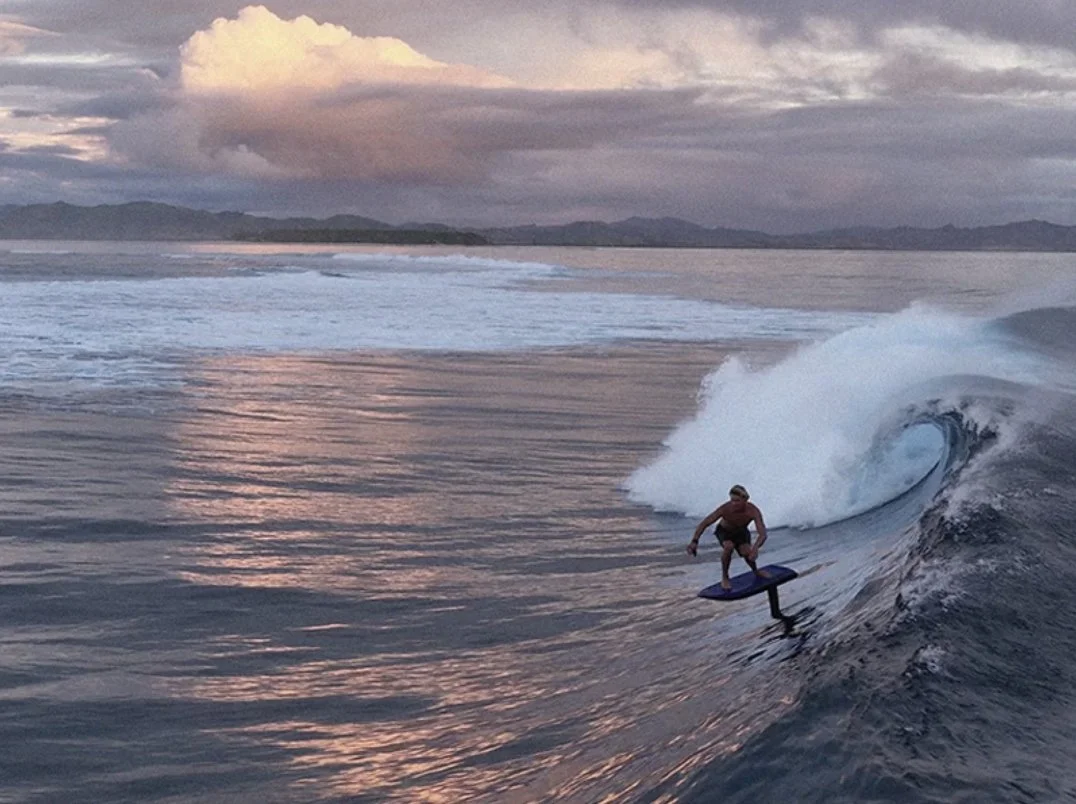
What Changed, and What It Means

Lay the four boards side by side and the evolution is clear:

Ultra — A performance eFoil. Optimised for powered riding. Exciting under motor, functional in waves if you worked at it. Footstraps and handles. The foundation.

Ultra L — The same board, stripped. Battery repositioned closer to the mast. Swing weight reduced. The first time an eFoil felt genuinely light enough to surf. No change to mast position, but a proof of concept: weight distribution is everything.

Ultra L2 — New shape. Narrower, longer, lower volume. Battery box centred directly over the mast. The board reshaped around the foil's pivot point. System weight down to 18 kilograms. Brilliant in waves, but the mast position still favoured powered riding.

Ultra L3 — Mast moved 2 centimetres forward. Tail kicker added. The board now optimised for what happens after the motor stops. Pitch stability in unpowered flight. The first Ultra that prioritises the wave over the engine.

Four years. Four boards. And the defining change — the one that made the biggest difference to how the board actually rides in surf — was a mast shift you could measure with your thumb.

That's not a criticism. That's the point. Anyone can make a radical change. It takes genuine understanding to make the right small one. Fliteboard didn't chase a revolution with the Ultra series. They iterated, obsessively, toward a vision that was always there in the background: an eFoil that a surfer would choose to ride in waves not because it has a motor, but despite it.

The Ultra L3, at its best, makes you forget the motor is there. Which is exactly the kind of madness that happens when engineers listen to waveriders. Or better still, are wave slaves themselves.

West Coast eFoil is a Perth-based eFoil retailer and experience provider. For more information on the Fliteboard Ultra range, visit westcoastefoil.com

Snorkelling Between Sessions: An Underwater Empire

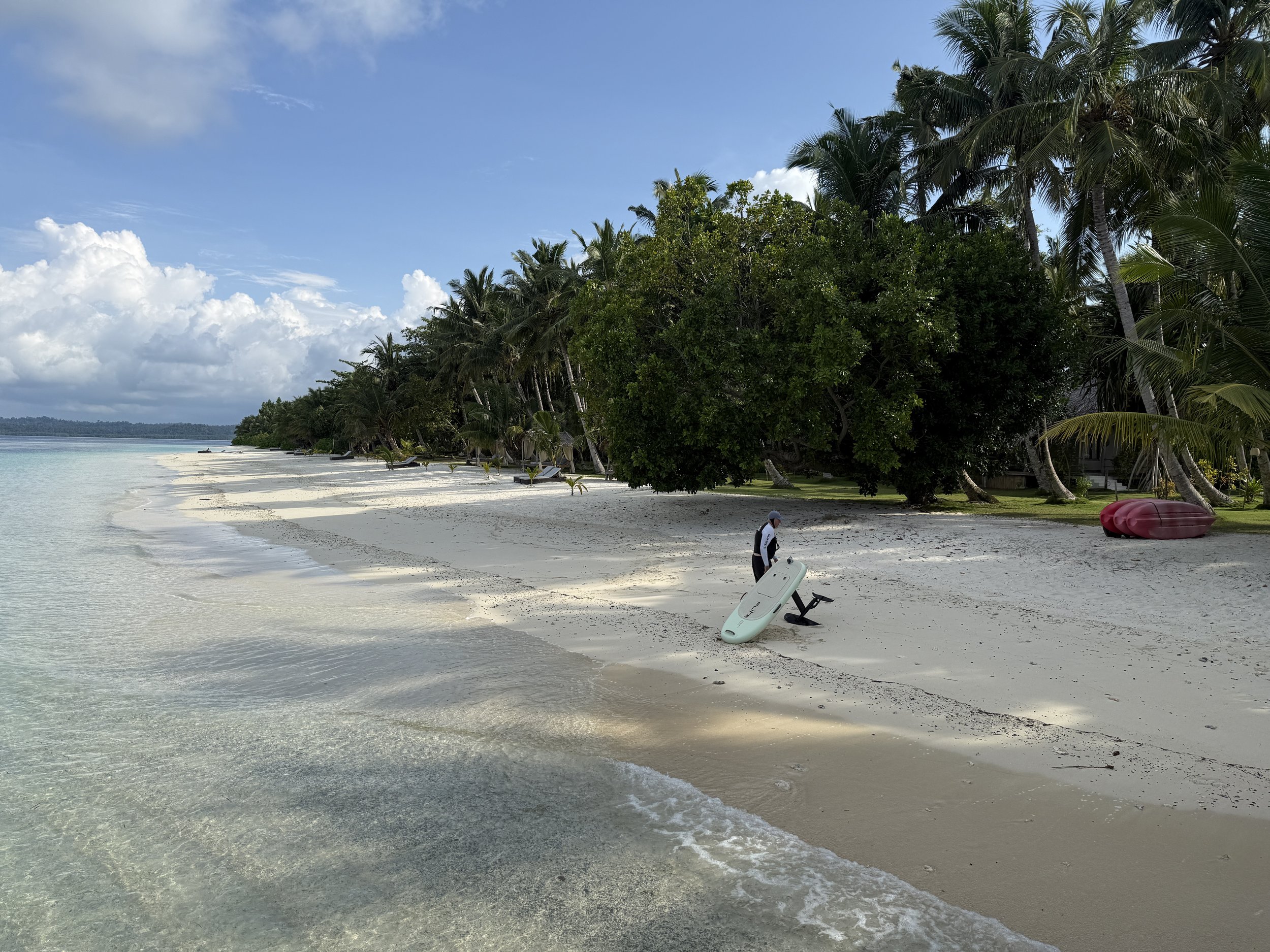
While the buzz of Fliteboarding and surfing draws adrenaline junkies to "Efoil Indonesia" adventure holidays, another drawcard is the coral diving trail right on your doorstep. The tropical reef is just a few steps from the villa’s private beach. The underwater experience reveals a different kind of magic: a technicolour ecosystem teeming with life.

A Reef ON YOUR DOORSTEP

As you wade into the warm, turquoise shallows, mask and fins in hand, the ocean floor transforms into a kaleidoscope of color. Branching staghorn coral runs for hundreds of metres. Schools of parrotfish dart through the water, their scales catching the sunlight in flashes of green and blue. But the stars of this underwater show are the clownfish, those orange-and-black-striped charmers, weaving through swaying anemones.

A little farther out, where the reef drops into deeper waters, moray eels peek from crevices, their toothy grins emerging from holes in the reef. Glide over the coral gardens, and you might spot a sea turtle lazily drifting by, its ancient grace a quiet contrast to the frenetic energy of the reef’s smaller inhabitants.

The Perfect Interlude

After a morning on the Fliteboards, snorkelling offers a serene way to rest the quads before an afternoon session. The "Efoil Indonesia" adventure holidays are designed to balance high-octane activities with moments of pure connection to nature. Snorkelling at Villa Mentawai requires no boat or guide — just step off the sunlounge and immerse yourself in this underwater Garden of Eden. The proximity of the reef means you can snorkel at your own pace, returning to the villa’s shaded cabanas for a fresh coconut between dives.

Why Villa Mentawai?

The magic of Villa Mentawai lies in its unspoiled setting and effortless access to world-class diving. The reef’s health and diversity are a testament to the region’s commitment to conservation. Whether you’re a seasoned snorkeler or a first-timer, the shallow, calm waters make this an ideal spot to explore. Pair this with the villa’s luxurious amenities and the exhilaration of efoiling, and you have a recipe for an unforgettable adventure. It also means your non-foiling friends and family will have plenty to do during your e-foil escape.

Plan Your Dive

Snorkelling gear is available at Villa Mentawai, and the best times to explore are early morning or late afternoon when the light bathes the reef in golden hues. Combine your snorkelling sessions with surfing and efoiling for a day to remember.

For more details on booking your "Efoil Indonesia" adventure, visit the “Travel” page at efoilindo.com

Flying in a blue dream …

HAWAIIAN STYLIN’: eFoiling to Aloita’s CLASSIC ‘Shirt Party’

The Mentawai sun was high in the sky as we fired up the Fliteboards for a unique mission: a 5km eFoil cruise from Villa Mentawai to Aloita Resort for their legendary Friday afternoon pizza-and-Hawaiian-shirt party. This wasn’t just transport, it was an accidental adventure through Indonesia’s turquoise playground.

The Fliteboard hummed underfoot, the gentle rush of carbon fibre wings slicing through glassy water like a hot knife through butter. Shutterbug Mike Wylie led the way, carving silky arcs past coral bombies with a floral shirt stashed in his drybag.

“I can already taste the mojitos!” Mike hooted, cranking the Bluetooth controller to 30 km/h. Paul Young, in a floral shirt that screamed Hawaii 5-0 retro, followed with the Fliteboard Classic, carving mini-mal moves across tiny swells. The buoyancy and “litre-age” of the Classic gave Paul the confidence to just foil in full party regalia. Falling was never an option for this Lord of the Lithium. The combination of a silent jet and dry knees was the only way for Youngy to arrive at one of the region’s finest resorts.

The route hugged the coastline, weaving through reef passes and past deserted beaches where palms leaned like wave-drunk surfers. Schools of trevally darted below, startled by the black carbon sashimi blades.

Aloita’s jetty came into view, fairy lights twinkling, pizza ovens blazing, and Hawaiian shirts everywhere. The crew docked their Fliteboards and wandered in. The night began over wood-fired margarita slices, with Mike regaling baffled Europeans with tales from the high seas in West Oz — riding Mystics off Augusta, defacing the waves off Rottnest, decapitating Kalbarri’s bombies. The enthusiasm grew with every fresh mojito or mai tai, which appeared in his sweaty palm at just the right moment by some form of magical Mentawegian osmosis.

In the Ments, where every trip’s an exploration, eFoiling to a Hawaiian party had set a new benchmark for feats of bravery, foolhardiness and Okanui-clad decadence. The trip home, of course, is a tale best told in person, to a backdrop of Bintangs and clove cigarettes.

Zara waits her turn for an efoil session on the main jetty at Aloita Resort. Paradise found.

Building bridges with Our Ocean School

Chasing Waves and Words: A visit to Our Ocean School in the Mentawais …

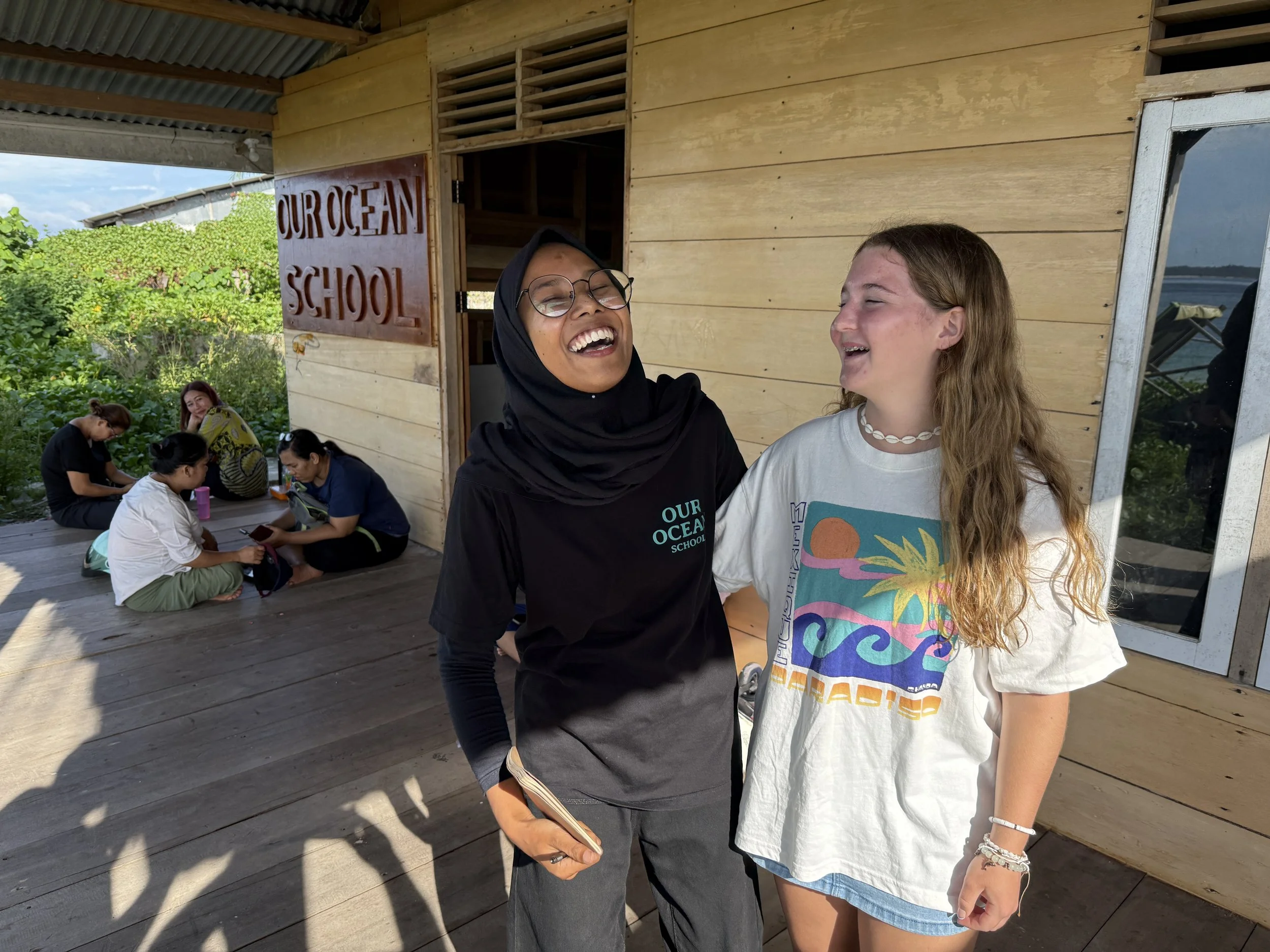
The Mentawai Islands, a slice of Indo paradise where jungle meets reef, are known for firing barrels and off-grid adventure. But in late 2024, a different kind of stoke brought West Coast eFoil founder Nathan Lynch, Fliteboarding prodigy Zara, and ocean advocate Paul Young to the shores of Siberut. They weren’t chasing waves this time — they were diving into the heart of Our Ocean School, a grassroots project teaching English to local kids after school. The trio, fresh off an e-foiling adventure at Seven Palms, rolled up to learn about the initiative and meet the pint-sized legends driving it forward.

The Mission: Our Ocean School’s Big Dream

Tucked in the village of Madobag, Our Ocean School (ouroceanschool.org) is more than an after-school program — it’s the highlight of the day for many Mentawai kids. Unlike Aussie kids, who can’t wait to ditch school at the first hint of a siren, these kids view education as a huge privilege and an opportunity to expand their options in life. They love learning in a way that might shock many Western parents.

Founded to bridge language gaps in a region where tourism is king, the school offers free English classes to primary and high school students, arming them with skills to thrive in a region being transformed by adventure tourism. These kids have access to the internet and see the opportunity that language skills can bring.

With over 250 kids enrolled, classes run in a simple open-air classroom, powered by local teachers and international volunteers. The goal? Empower the next generation to protect their ocean, culture, and future, all while mastering phrases like “Where’s the best surf spot?” and “Do you hire surfboards?”

Zara, 14 and already a Fliteboard trailblazer, was stoked to see kids her age embracing their learning journey. Her favourite subject at high school in Perth, Western Australia, is English.

Nathan, in addition to founding West Coast eFoil, is a professional author himself. Paul, meanwhile, is a co-owner of Villa Mentawai who is never short of words. So the school and its mission had special meaning for our intrepid group of e-foilers.

The Arrival: Children, Chalkboards, and Cheers

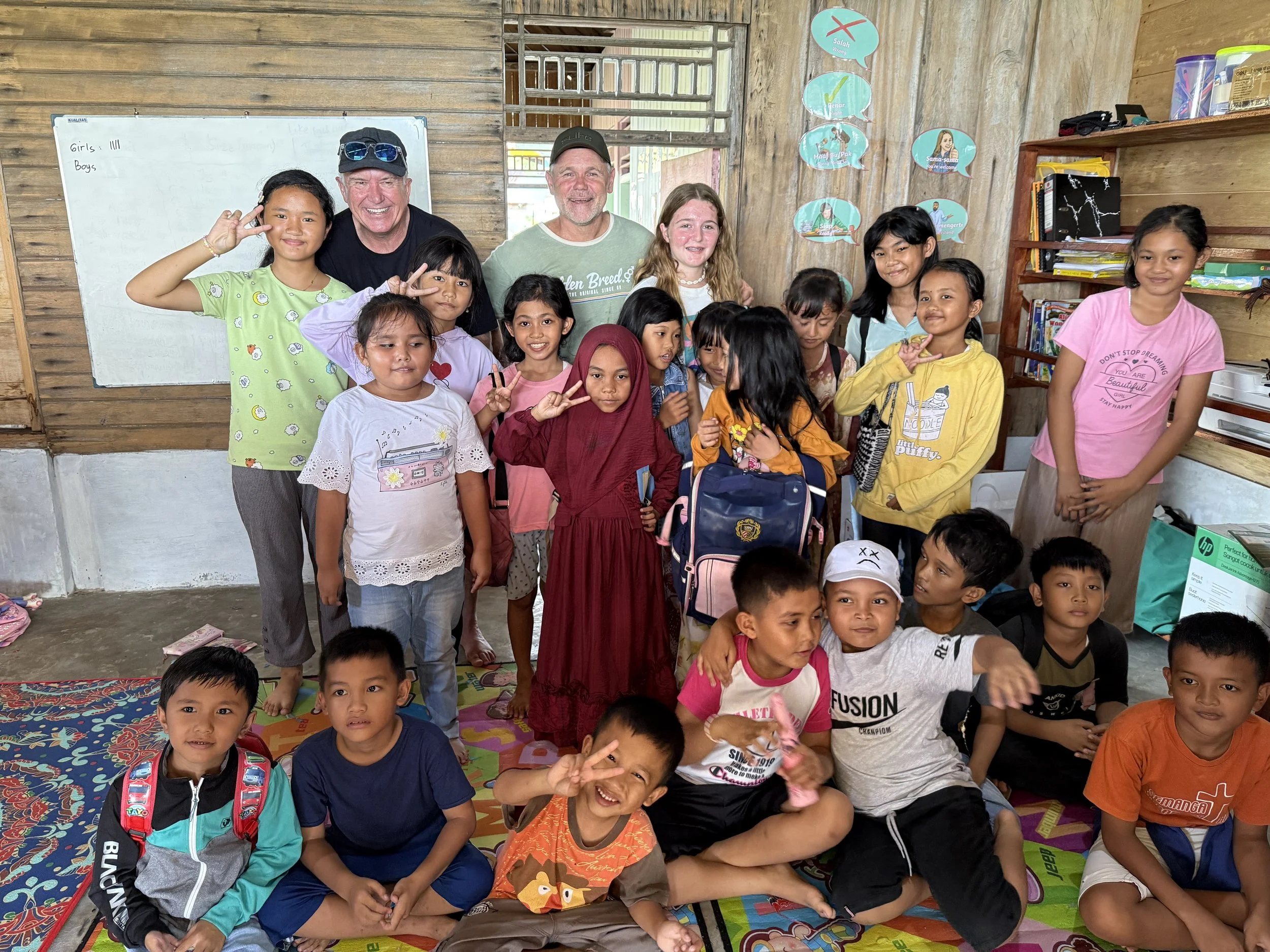
The trio took a boat from Villa Mentawai to the main island of Sipora, weaving past mangroves under a blazing equatorial sun, ready to trade stories and soak up the program’s magic. When they arrived on Tua Pajet’s sandy beachfront, the scene looked idyllic. The school, a wooden structure with a tin roof, buzzed with energy. Children were peeking out, giggling and pointing at Zara’s long blonde hair and surf wear. The head teacher, and co-founder, Mentari Maharani, welcomed them with a megawatt smile.

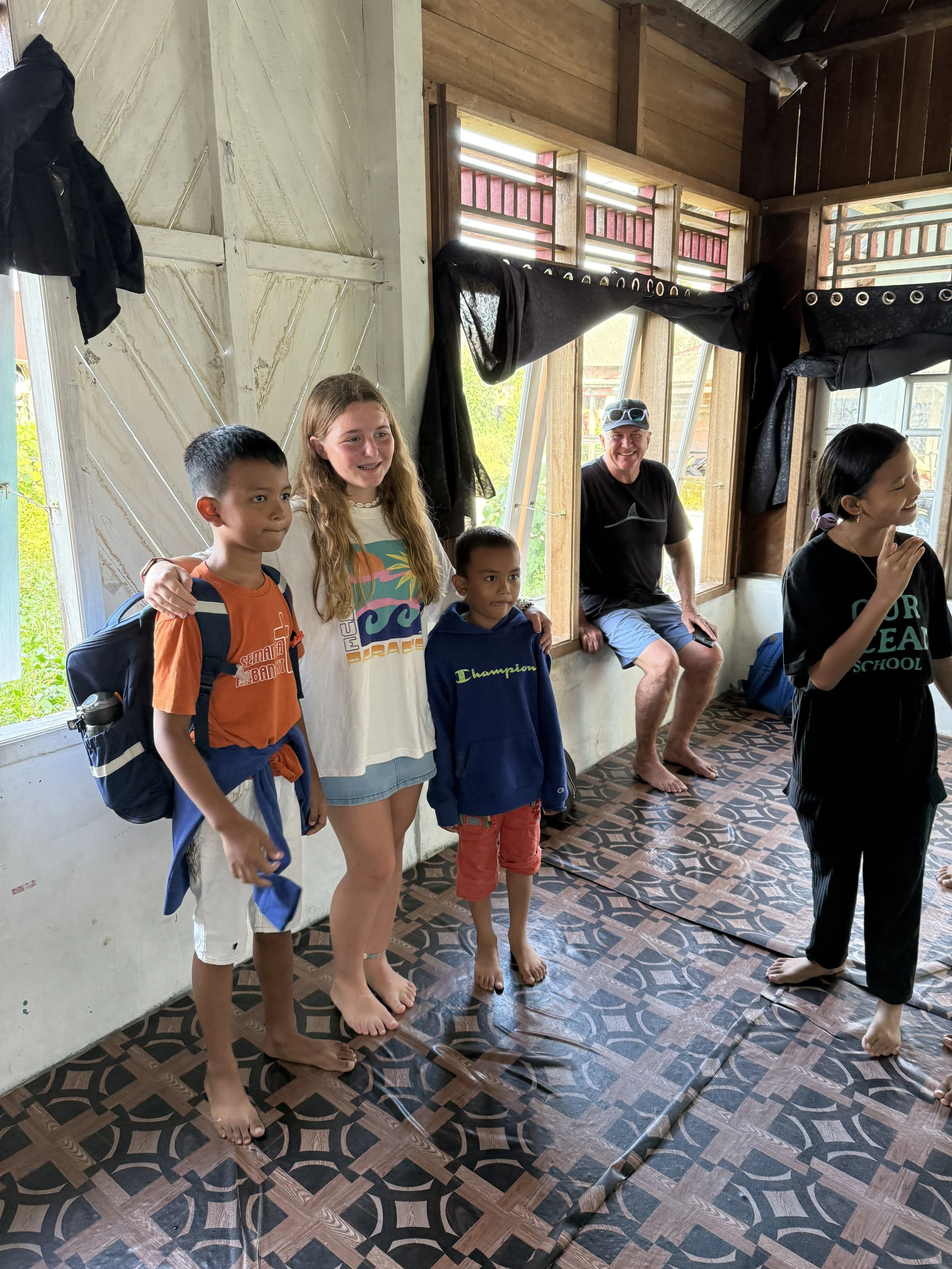
“They’ve been practicing their English for you,” she said, ushering the guests into a timber-clad classroom where 30 kids, aged 8 to 16, sat cross-legged.

Zara, barely older than the students, was an instant hit.

“What do you want to be when you grow up?” she asked.

The answers came flying like baitfish. Astronaut. Teacher. Surfer. Pilot. Hotel owner.

“What about a Fisherman?” asked Nathan, who recently completed his coxswains course and was looking enviously at the boats lined along the beach, and men next door tending nets.

“Nooooooo!” came the unanimous reply.

What an insight! Being a boatman or a fisherman in Australia is a path to riches, or at least adventure. It’s draped in mystique and the romance of the high seas. The barriers to entry (boats, qualifications, permits, AMSA certifications) are astounding.

In the Mentawais, the kids are surrounded by hardworking seafarers. It’s regarded as a very tough, smelly, rugged, existence. They have no such Hemingway-esque allusions of the romance of the sea. Meanwhile, we dream of an idyllic island life from the stuffy confines of our battery-hen office existence. Variety and balance truly is the spice of life, particularly when you find yourself exploring the spice islands of the old Dutch East Indies.

Ibu Maharani asked Zara to explain her sport of efoiling to the group.

Do you surf on the water or above it?” a student asked, eyes wide.

Zara laughed, launching into a play-by-play account of eFoiling, miming the Fliteboard’s glide with her outstretched hands. The kids were captivated — but most of all they wanted to know Zara’s TikTok handle.

(Spoiler alert, dad doesn’t let her use TikTok).

Classy Affair: Learning with Stoke

Paul got the older students talking about plastic pollution, using a beach cleanup they’d done as a springboard. “You’re the future of this place,” he told them, describing a turtle he had seen tangled in a net. The kids nodded seriously, understanding their role as custodians.

The next highlight was story time. Zara shared where she lived in Perth, telling the locals about her school and her flying hovercraft. The kids gasped at her tales, then took turns sharing their own stories — fishing, swimming, surfing.

Paul wrapped it up with a call to action: “Learn English, and tell the world to save your reefs.”

The kids scribbled notes, some no doubt adding “Fliteboard” to their vocab lists.

The Impact: Surf, School, and a Shared Future

As the sun dipped, the trio joined the kids with a song. “Heads, Shoulders, Knees and Toes” appears to be a global musical phenomenon.

The vibe was pure Mentawai: raw, real, and full of heart. Zara swapped bracelets with the kids, promising to get on TikTok and send a video of her next e-foil session.

Our Ocean School’s mission hit home for the trio. Zara saw herself in the kids—fearless, curious, ready to take on the world. It was also a huge eye opener about the power and privilege of education.

“I think we really take our school back home for granted,” Zara said, as she wandered away down the unpaved street the leads to the port at Tua Pejat.

Learn more about Our Ocean School’s mission and programs at ouroceanschool.org.

Seven Palms expedition!

Flying In Paradise: The First eFoil Session IN INDO’S Mentawai Islands

The Mentawai Islands, a chain of jungle-draped gems off West Sumatra, have long been the stuff of surf dreams. Hollow, turquoise barrels spinning over razor-sharp coral reef, where trade winds airbrush the surface of endless points and the next headland holds another mystery. For decades, surfers have made the pilgrimage to breaks like Macaronis, Rifles, and Lances Right, chasing that perfect wave. But in September 2024, a new kind of stoke hit these waters: the first-ever Fliteboard eFoil session at Seven Palms, a lesser-known gem on the Mentawai map. Leading the charge were West Coast eFoil team rider Zara, a 14-year-old prodigy with a fearless energy, and Anthony Spencer, an Australian shredder whose name is synonymous with rail surfing and exploration.

After months of planning and logistics, with batteries and equipment travelling weeks in advance of the team, the first ever e-foiling session took flight in one of the world’s most iconic surf zones.

The Setup: Seven Palms and the Fliteboard Frontier

Seven Palms, tucked in the southern Mentawais, isn’t your headline-grabbing break like HT’s or Rifles. It’s a playful, rippable left-hander that peels over a coral shelf, offering long walls and punchy sections when the swell aligns. Named for the cluster of coconut trees swaying over the white-sand beach, it’s got that raw, untouched feel — remote enough to feel like you’re cheating the crowds, but accessible via a quick boat ride from Tua Pejat. The break’s versatility makes it a perfect canvas for eFoiling, where you don’t need a massive swell to fly.

Fliteboard, the Aussie-born electric hydrofoil brand, has been rewriting the rules of water sports since its inception. Their Series 5 eFoil—think carbon-fiber sleekness, a silent jet propulsion system, and a Flitecell battery that hums for up to 2.5 hours—is less a board and more a time machine. It lifts you above the water, skimming over the surface like a low-flying pelican, controlled by a Bluetooth remote that feels like an extension of your imagination. The mix of high-tech against a timeless backdrop of raw jungle was surreal.

The duo rolled up to Seven Palms with a crew from West Coast eFoil, who’d hauled their gear across the Indian Ocean for this historic sesh. The logistics were no joke: fast ferries from Padang, a bouncing boat ride through indigo channels, and a quiver of Fliteboards strapped to the deck. The vibe was electric — it’s not often you get to ride a new high-tech craft in such a wild location.

As the boat anchored off the reef, Zara, all 14 years of grit and stoke, was already eyeing the lineup, while Spencer, with his trademark gaze, was itching to carve up the glassy walls.

The First Flight: Zara’s Meteoric Rise

Zara, the youngest rider to ever rep West Coast eFoil, is a force of nature. At 14, she’s got the kind of fearless energy that makes grown surfers rethink their life choices. Raised on Perth’s lacklustre beach breaks, she’s quickly gravitated towards the open ocean potential of e-foiling. She can often be seen with her dad riding the 3-mile reef off Hillarys. But eFoiling at Seven Palms? That’s next-level. “I’m kind of nervous but also excited,” Zara said, clutching the Flite controller, as she jumped off the Villa Mentawai surf boat.

The Fliteboard’s learning curve is famously forgiving—beginners can be foiling in minutes—but doing it in the Mentawais, where reef lurks inches below, takes serious cojones. Navigating the coral reef and dodging clean-up sets was quite the feat for our teenage waterwoman.

Zara’s first run was a blend of trepidation and beauty. If she hot the reef it could have been the end of the trip. The Fliteboard’s jet kicked in, lifting her above the water as she balanced, eyed the lineup, then locked in. Seven Palms was glassy, overcast, with a gentle 3-foot swell rolling through, and Zara was flying—literally—carving smooth arcs across the face of the water outside the foam line. The board’s aluminium mast sliced silently through the water, leaving barely a ripple.

“This is the best thing I’ve ever done,” she yelled over the hum of the jet. The mix of pride and apprehension on her dad’s face was palpable.

“I’m glad her mum can’t see this,” he said from behind the glass of a Canon SLR.

By Zara’s third run, she was pumping the board closer to the break, weaving through imaginary slalom gates, her hoots echoing into the densely-packed palms. The locals on the beach—kids mostly, wide-eyed and pointing—had never seen anything like it. To them, Zara was a superhero, skimming over the reef like something out of a sci-fi flick.

Spencer’s Masterclass: Shredding the Invisible Wave

Anthony Spencer, the Aussie legend who’s been torching lineups from Yallingup to Byron since the early 2000s, brought a different flavour. Known for his style and rail surfing, he approached the Fliteboard like a shortboard on steroids.

Spencer immediately arced into the impact zone, driving the Fliteboard’s wing tips closer to the reef for maximum buzz. Seven Palms offered just enough swell to let him play, but the eFoil’s magic is that it doesn’t need waves to shred. Spencer was out there carving up on a day when most surfers were watching the AFL grand final at The Bakery.

Anthony cranked the Fliteboard to 35 km/h, skimming parallel to a peeling left, then soul arched down the reef in a move that had the boat hooting.

“It’s like surfing with cheat codes,” he laughed, shaking saltwater from his hair.

Unlike traditional surfing, where you’re at the mercy of the ocean’s mood, the Fliteboard gave Spencer the chance to rip on what would normally have been a lay day. He was painting lines on a blank slate, turning Seven Palms into his personal playground.

The Thrill of Exploration: Redefining the Mentawai Dream

What made this session historic wasn’t just the tech—it was the spirit of exploration. The Mentawais have always been about pushing boundaries, from the early surfers who braved the local boats and malaria risks in the ‘80s to the modern chargers chasing 10-foot barrels at Greenbush. Zara and Spencer were rewriting what’s possible in these waters. The Fliteboard let them explore beyond the break, cruising over coral gardens and sand channels where traditional boards can’t go.

Later in the trip they would explore mangroves, chase schools of fish, and zip around Awera and Aloita Resorts, where the water was so clear you almost lost track of your altitude.

For Zara, it was about freedom. “You’re not stuck waiting for sets,” she said. “You can just go—anywhere, anytime.”

The Fliteboard’s eco-friendly edge — no emissions, near-silent propulsion — also resonated in the Mentawais, where the pristine environment is as much a draw as the waves. The locals, initially skeptical, were won over when they saw how cleanly the boards moved, leaving the reef untouched.

The defining image of the session was Anthony gliding on a wall, without so much as rippling the wave face, while a surfer rode behind him, hooting at the surreal sight he was witnessing.

The Aftermath: A New Chapter for Indo Adventure

For now, the Mentawais remain a surfer’s paradise, but Zara and Spencer’s session at Seven Palms has cracked open a new frontier. It’s not about replacing traditional surfing—it’s about expanding the playground. As Zara put it, “It’s like surfing, but you’re free to explore the whole ocean.”

And in a place as wild and untouched as the Mentawais, that’s the kind of freedom that keeps the dream alive.